

Clarity Through Action: Overcome Overthinking
Mindset, Clarity, Personal Growth
Clarity Comes From Action, Not Overthinking
When life feels foggy, it’s tempting to sit, think, and wait for the perfect answer to appear. Yet again and again, real clarity arrives only once we move. In this friendly guide, we’ll explore why clarity comes from taking action, how overthinking causes confusion, and how you can use small steps, gentle experimenting, and everyday decisions to build confidence and momentum in your own life.
Why Thinking Harder Isn’t the Same as Seeing More Clearly
Let’s start with an honest truth: you’re probably not short of intelligence, insight, or information. Most people who get stuck are not lazy or clueless; they’re simply trapped in their own heads. You replay options, analyse every outcome, and try to predict the future from the safety of your sofa. It feels productive, but often it’s just polished procrastination.
Overthinking creates an illusion of control. If you just think a bit more, you’ll find the perfect answer, avoid every mistake, and glide forward with total certainty. In reality, the opposite happens. The more you turn a decision over in your mind, the more anxious and uncertain you can feel. Instead of clarity, you get mental clutter. Instead of confidence, you get hesitation. This is the paradox: overthinking causes confusion, even when your goal is to feel more sure.
📌 Key Takeaway: Thinking is useful up to a point. Beyond that point, every extra minute in your head adds noise, not insight.
How Action Cuts Through the Mental Fog
Imagine trying to decide whether you’ll enjoy a new hobby, a different career path, or a new city. You can sit and think about it for weeks, but your thoughts are based on guesses and assumptions. Once you take action – book a taster class, shadow someone at work, or spend a weekend in that city – you get real data. Suddenly, your questions are no longer abstract. You know how it feels, how you respond, what excites you, and what doesn’t. That’s clarity through experience, not through endless analysis.
Action is powerful because it exposes your ideas to reality. It shows you what works, what doesn’t, and what matters to you in practice, not just in theory. As you move, you get feedback: emotions, results, reactions, opportunities. Those signals help you refine your choices. Step by step, your path becomes clearer – not because you thought harder, but because you tried something.

Tiny completed actions compound into powerful clarity and genuine confidence over time.
The Power of Taking Small Steps
When you’re stuck, the idea of a big dramatic change can feel overwhelming. That’s why small steps are so important. You don’t have to redesign your entire life in a week. You just need to take the next tiny, honest step available to you. This is where real confidence building begins – not with grand gestures, but with consistent, manageable action.
Want a new career? Start with a 20-minute conversation with someone in that field.
Considering a creative project? Block out half an hour this week and create a rough first draft.
Thinking about getting fitter? Begin with a 10-minute walk after dinner, not a marathon training plan.
These steps may look small on paper, but they’re huge in terms of mindset and momentum. Every small action tells your brain, “I am someone who moves, not just someone who thinks about moving.” That identity shift is at the heart of sustainable personal growth. You stop waiting for certainty and start building it through lived experience.
💡 Pro Tip: If a step feels too big, shrink it until it feels almost embarrassingly easy – then start there.
Experimenting: Treat Your Life Like a Series of Gentle Trials
One of the biggest reasons people stay stuck in action overthinking is the fear of getting it wrong. If every decision feels final and irreversible, of course you’ll hesitate. The antidote is to treat your choices as experiments rather than verdicts on your worth or future. Experiments are temporary, adjustable, and designed to teach you something – which is exactly what you need when you’re seeking clarity.
Think of experimenting as a kind of compassionate curiosity towards your own life. Instead of asking, “Is this the right choice forever?” you ask, “What might I learn if I try this for a while?” That shift softens the pressure and invites you to explore. You give yourself permission to test, adjust, and even change your mind – all of which are completely normal parts of growth, not signs of failure.
Experiment with your routine: Try waking up 30 minutes earlier for a week and see how your energy feels.
Experiment with hobbies: Join a four-week course rather than signing a year-long contract.
Experiment with social life: Say yes to one new event this month and notice what it brings up for you.
Each experiment gives you information. You find out what energises you, what drains you, and what genuinely aligns with your values. Over time, this series of small, low-pressure experiments becomes a powerful form of decision making. You’re no longer guessing in the dark; you’re choosing with insight.
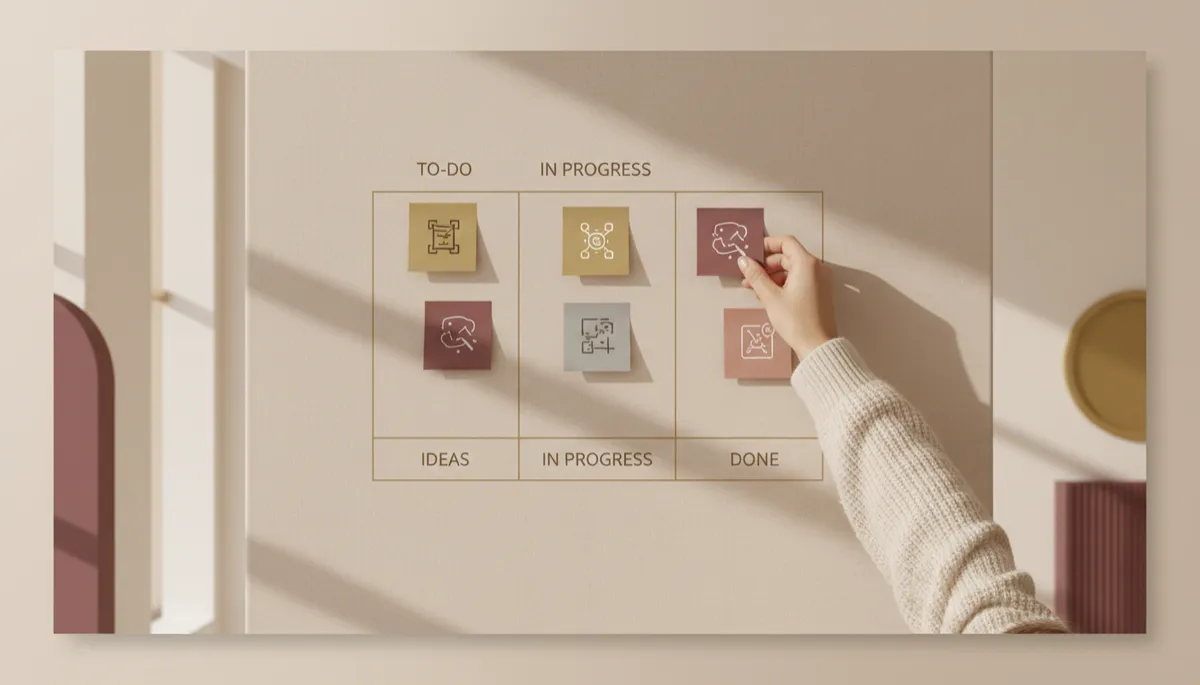
Treating decisions as experiments removes pressure and invites honest exploration.
How Action Builds Confidence (Even When You’re Unsure)
Many people wait to feel confident before taking action. In reality, confidence is the result of action, not the precondition. You don’t become confident by reading about courage; you become confident by doing slightly scary things and discovering that you can handle them. Each time you follow through on a small step, you reinforce a quiet but powerful belief: I can trust myself to act, even when I’m not 100% sure.
This is where clarity and confidence building intertwine. Action gives you clarity about what works for you, and that clarity, in turn, makes it easier to act again. It’s a positive loop. On the other hand, overthinking often leads to a negative loop: the more you hesitate, the less confident you feel, and the less likely you are to move. Breaking that cycle with even one small action can be transformative.
📌 Key Takeaway: Don’t wait to feel fearless. Aim to feel just brave enough to take the next step in front of you.
Spotting When Overthinking Has Taken Over
It’s helpful to recognise the early signs that you’ve slipped from healthy reflection into unhelpful rumination. Here are a few gentle indicators that overthinking is causing confusion rather than clarity:
You keep revisiting the same thoughts without reaching a decision or taking action.
You feel more anxious the longer you think about it, not calmer or more informed.
You’re waiting for a feeling of 100% certainty before you do anything at all.
You spend more time researching, comparing, and imagining scenarios than trying even the smallest real-world step.
When you notice these patterns, don’t beat yourself up. Overthinking is a very human habit, especially for thoughtful, caring people. Instead, use it as a friendly cue: “Ah, my mind is looping. Time to take a tiny action.” That action might be as simple as writing down your options, sending one email, or committing to a short experiment over the next week. The goal is not to solve everything instantly, but to gently shift from mental spinning to practical movement.
A Simple Decision-Making Framework: Think, Then Test
You don’t need to abandon thinking altogether. In fact, thoughtful reflection is a valuable part of decision making. The key is to pair thinking with timely action, rather than letting it become an endless delay. Here’s a friendly framework you can use:
Define the real question. What decision are you actually trying to make? Write it in one clear sentence.
Give yourself a time limit to think. This might be 20 minutes, a day, or a week, depending on the decision. During that time, you can reflect, research, and talk things through with trusted people.
Choose a small test action. Ask yourself, “What’s one small step I can take to test this option in real life?” Make it specific and doable.
Take the step and notice what you learn. Pay attention to your feelings, energy, and results. What becomes clearer after acting?
Adjust and repeat. Use what you’ve learned to refine your next step. Over time, this creates a natural pathway towards the right decision for you.
This “think, then test” approach respects your thoughtful nature while honouring the truth that clarity comes from action. You give your mind a role, but you don’t let it run the whole show. Your life becomes less about perfect plans and more about responsive, grounded movement.
Turning Insight Into a Daily Habit of Action
Knowing that action leads to clarity is one thing; living it day to day is another. To make this mindset part of your everyday life, it helps to create gentle structures and rituals that support you. Here are a few friendly ideas you can adapt:
The “one step” rule: Each morning, identify one meaningful action that would move you forwards, even slightly. Commit to doing it before you end your day.
The 10-minute experiment: When you feel stuck, set a timer for 10 minutes and work on the task in front of you. When the timer ends, you can stop – but most people find they’re happy to continue once they’ve started.
The weekly reflection: Once a week, look back and ask, “What did I actually do? What did I learn from those actions?” This reinforces the link between taking action and gaining clarity.
Over time, these small habits add up. You become someone who moves gently but consistently towards what matters, rather than someone who waits for the perfect moment. Your decisions become less about pressure and more about alignment. You learn to trust that even if you can’t see the whole path, the next step is almost always within reach.
Bringing It All Together: Clarity, Action, and Your Next Step
When you look back on the turning points in your life, they probably weren’t moments of perfect certainty. They were more likely moments where you felt unsure but moved anyway – you sent the message, booked the ticket, said yes, or finally said no. Those decisions may have started small, but they created ripples of personal growth and confidence building that shaped who you are today.
Remember: clarity comes from action, not overthinking. Thoughtful reflection has its place, but it’s your willingness to experiment, to take small steps, and to learn from real experience that truly lights the way. When your mind starts to spiral, you don’t have to untangle every thought before you move. You can simply ask yourself:
“What’s one small, kind action I can take today to learn more about this?”
Then, gently, bravely, take that step. Let the world respond. Let yourself respond. Let your understanding deepen not just in your mind, but in your body and your life. Over time, you’ll find that the fog lifts not because you forced yourself to think harder, but because you dared to move, learn, and grow – one small, human step at a time.