
Embrace Change: Outgrow Your Old Self
Personal Growth, Self-reflection, Embracing Change
You’re Allowed to Change Your Mind: Why Outgrowing an Old Version of Yourself Is a Good Thing
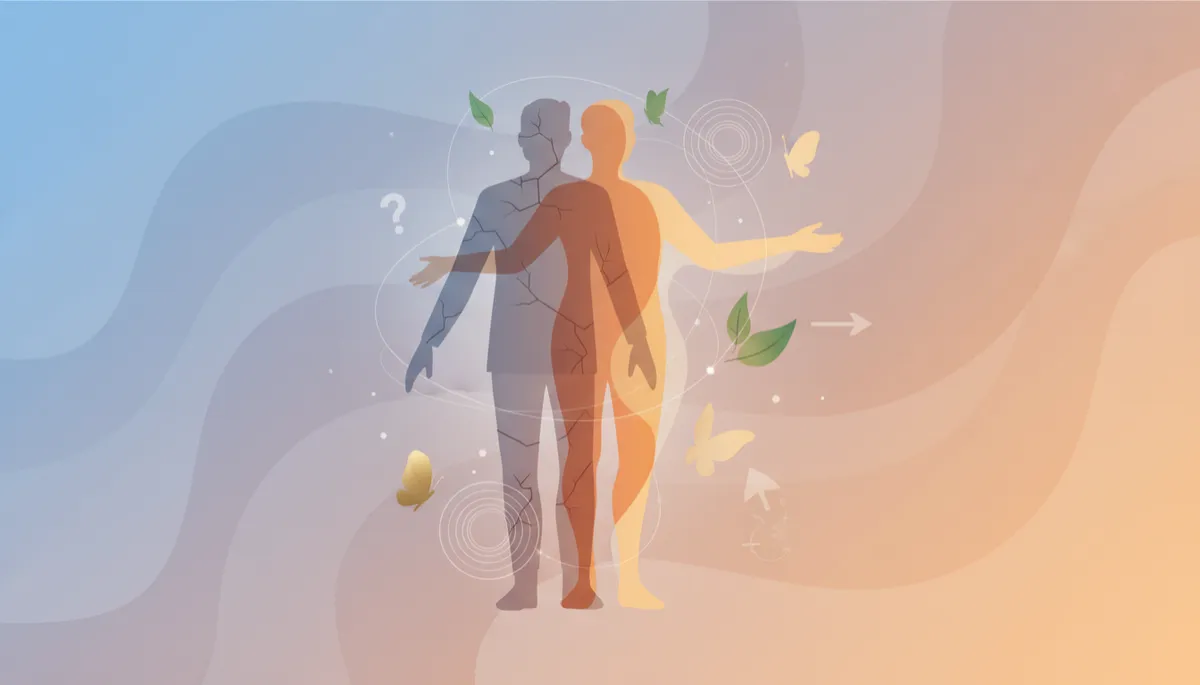
There comes a quiet moment in many lives when you realize the person you worked so hard to become no longer feels like you. The job you chased, the relationship you defended, the beliefs you once argued for—suddenly they feel tight, like clothes that shrank in the wash. It can be unsettling, even scary. But that uncomfortable feeling is often the first sign of genuine personal growth, not failure. You’re not broken. You’re simply outgrowing an old version of yourself, and you are absolutely allowed to change your mind.
When “Who You Were” No Longer Fits “Who You Are”
Think back to who you were five or ten years ago. You probably wanted different things, surrounded yourself with different people, and held different opinions. That older version of you wasn’t wrong; they were simply responding to the information, experiences, and needs they had at the time. As your life changes, your inner world naturally shifts too. You gather new experiences, heal from old wounds, and see patterns you once missed. It makes sense that your choices would evolve along with you.
Yet many of us feel guilty when we notice that we’re outgrowing identity layers we once wore proudly. We tell ourselves, “But I chose this,” or “People expect me to stay this way,” or “I’ve invested too much to walk away now.” Underneath those thoughts is a quiet fear: if we change, will it mean we were wrong all along? The truth is more generous. Changing your mind is not a confession of failure; it’s a reflection of your capacity to learn, to listen to yourself, and to honor the person you are becoming.
💡 Gentle reminder: You are under no obligation to stay the person other people remember you as.
Personal Growth Means Letting Old Stories Go
At the heart of personal growth is the willingness to examine the stories you tell yourself about who you are. Maybe you’ve always been “the reliable one,” the person who never says no. Perhaps you were “the ambitious one” who promised you’d never slow down, or “the caretaker” who put everyone else first. These identities can feel comforting, but over time they can also become cages if they no longer match your inner reality.
Growth often begins with a quiet realization: “I don’t actually want what I said I wanted.” Maybe the career ladder you’ve been climbing leaves you drained. Maybe the social circle you once loved no longer reflects your values. Maybe a long-held belief starts to feel too small. These moments can stir up shame—“Have I been lying to myself?”—but they are actually invitations. They invite you to step into a more honest, spacious version of your life, one that makes room for how you’ve changed.
“Personal growth is less about becoming someone new and more about remembering who you were before the world told you who to be.”
The Courage to Change Your Mind
To change your mind is to admit that new information, new feelings, or new perspectives have arrived. That takes courage. It means prioritizing truth over consistency, alignment over appearance. Many of us were taught that “sticking with it” is always noble and “quitting” is weak. But there is a world of difference between giving up too soon and recognizing that you’ve reached the natural end of a path that no longer fits you.
Changing your mind can look like:
Leaving a career you once loved because your values have shifted.
Ending a relationship that no longer feels healthy, even if it once did.
Adjusting a long-term goal because you’ve discovered a passion you didn’t know you had.
Revising a belief or opinion after listening deeply to someone else’s experience.
None of these choices mean you were wrong to want what you once wanted. They simply mean you are awake enough now to notice that something different is calling you. That is not weakness. That is wisdom.
Self-reflection: The Bridge Between Who You Were and Who You’re Becoming
The process of self-reflection is what allows you to notice that you’re changing. It’s the pause between your old habits and your new desires. Without reflection, you might keep moving on autopilot, following outdated scripts simply because they’re familiar. With reflection, you gain the ability to ask, “Is this still true for me?” and “What do I actually need now?”
Self-reflection doesn’t require a retreat or a dramatic life overhaul. It can be woven gently into your daily life. You might:
Journal for ten minutes at the end of the day about what felt energizing and what felt heavy.
Take a quiet walk without your phone and simply notice what thoughts come up when there’s space.
Ask yourself before saying yes to something, “Am I choosing this from habit, or from honesty?”

Regular self-reflection creates space to notice when your needs and values have changed.
Over time, these small moments of reflection help you see patterns. You might realize that certain commitments always leave you drained, or that you light up when you talk about a particular topic. You begin to sense where your life is aligned with who you’re becoming, and where you’re still acting from an outdated version of yourself. That awareness is the first step in choosing differently—with compassion rather than criticism.
💡 Reflective prompt: “Where in my life am I staying the same just because it’s what I’ve always done?”
Outgrowing Identity: When Your Old Labels Feel Too Small
Identities are powerful. They help us navigate the world and give us a sense of belonging. But they can also become cramped when we treat them as permanent instead of provisional. You might have built an entire life around being “the high achiever,” “the dependable friend,” “the free spirit,” or “the peacemaker.” These roles may have served you well, but they are not the entirety of who you are. Over time, you may notice that these labels feel too narrow, that they leave out important parts of you that are asking to be seen.
Outgrowing identity doesn’t mean rejecting your past self. It means acknowledging that you are more complex than any single story. You can still be ambitious and crave rest. You can be reliable and learn to set boundaries. You can be independent and still want deep connection. When you give yourself permission to expand beyond your old labels, you create room for a more honest, nuanced version of you to emerge.
This expansion can feel uncomfortable at first, especially if people around you are attached to your old identity. They might say, “You’ve changed,” as if that’s a bad thing. But change is inevitable. The deeper question is: are you changing in a direction that feels more truthful, more aligned, more compassionate toward yourself? If the answer is yes, then outgrowing an old identity is not a loss—it’s a liberation.
The Sunk-cost Fallacy: Why “I’ve Come This Far” Is Not a Good Enough Reason to Stay
One of the biggest barriers to changing your mind is the sunk-cost fallacy. This is the tendency to keep investing time, energy, or money into something simply because you’ve already invested so much—even when it’s no longer right for you. It sounds like:
“I can’t leave this job; I’ve spent ten years climbing this ladder.”
“We’ve been together for so long; I can’t walk away now.”
“I’ve already put so much money into this degree; I have to keep going.”
The sunk-cost fallacy convinces you that leaving would “waste” what you’ve invested. But the truth is that staying in a life that no longer fits you is the real loss. The time, effort, and care you’ve already given are not wasted just because you choose a different direction now. They shaped you. They taught you what you value, what you can survive, and what you no longer want. Those lessons come with you, even if you walk away from the original plan.
📌 Key takeaway: Past investment is not a good enough reason to keep paying with your present wellbeing.
When you notice the sunk-cost fallacy showing up, try gently reframing the question. Instead of asking, “What have I already put in?” ask, “What do I want to feel and create from this point forward?” Your past is fixed; your future is still flexible. You deserve to make choices based on where you are now, not just where you started.
Embracing Change as a Daily Practice, Not a Single Decision
We often imagine embracing change as a dramatic moment: a resignation letter, a breakup conversation, a one-way ticket. Sometimes it does look like that. More often, though, it’s a series of small, consistent choices that honor your evolving self. It’s choosing to rest when your old self would have powered through. It’s saying “no” to something that doesn’t feel aligned, even if you can’t yet see what you’re saying “yes” to instead. It’s allowing uncertainty to sit beside you without rushing to fill the space with the nearest familiar thing.
Embracing change doesn’t mean never feeling afraid. Fear is a natural companion whenever you step into new territory. The goal isn’t to eliminate fear but to build enough trust in yourself that you can move gently forward anyway. You can acknowledge, “Yes, I’m scared, and I also know staying stuck would be more painful in the long run.” That quiet, steady courage is where transformation truly takes root.
💡 Pro Tip: When change feels overwhelming, focus on the next honest step, not the entire path.
How to Gently Support Yourself While You’re Changing
Outgrowing an old version of yourself can feel like standing between two worlds: the familiar one you’re leaving and the not-yet-clear one you’re moving toward. During this in-between time, self-kindness matters more than ever. A few supportive practices can make the transition feel less lonely and more grounded:
Name what’s changing. Write down the parts of your life that no longer feel aligned, and the feelings that signal this misalignment—tension, resentment, numbness, or restlessness. Naming them helps you see that you’re not “being dramatic”; you’re noticing real information.
Honor what was. Before you move on, acknowledge what the old path gave you: skills, friendships, resilience, lessons. Gratitude for the past and a desire for change can coexist.
Invite safe support. Share your reflections with someone who can listen without trying to rush you back into your old identity—a trusted friend, mentor, coach, or therapist.
Create small experiments. Instead of overhauling everything at once, try gentle experiments that align with who you’re becoming: a new class, a boundary, a different way of spending your weekends.
These practices remind you that change doesn’t have to be chaotic. It can be deliberate, thoughtful, and paced in a way that respects your nervous system. You don’t have to prove anything by rushing. You’re allowed to grow at the speed of honesty.
Rewriting the Story: From “I’m Inconsistent” to “I’m Growing”
One of the most healing shifts you can make is to reinterpret what it means to change your mind. Instead of seeing it as a sign of inconsistency, you can choose to see it as evidence of growth. The old story says, “If I change, people will think I can’t commit.” The new story says, “If I change, I’m showing that I’m paying attention to my life.” The old story says, “I should have known better from the start.” The new story says, “I made the best choice I could with what I knew then. Now I know more, so I’m choosing differently.”
This reframing is not about avoiding responsibility. It’s about releasing unnecessary shame so you can take healthy responsibility for your next steps. You can acknowledge past choices, make amends where needed, and still offer yourself the compassion required to move forward. Growth is not linear, and it rarely looks tidy from the inside. But each time you allow yourself to update your life to match your current truth, you strengthen the trust between you and yourself—and that trust is one of the most valuable things you can build.
You’re Not Starting Over; You’re Starting From Experience
When you decide to change course, it can feel like you’re “starting from scratch.” That phrase alone can be discouraging enough to keep you stuck. But you are never truly starting over. You are starting from everything you’ve lived, learned, survived, and created so far. The skills you developed in one career can support you in another. The emotional strength you built in one relationship can help you choose more wisely in the next. The insights you gained from believing one thing can deepen your understanding when you adopt a new perspective.
Outgrowing an old version of yourself is not a rejection of your past; it’s an integration of it. You’re taking what serves you, leaving what doesn’t, and allowing yourself to evolve. That is the heart of personal growth. It’s not about becoming a polished, perfect final product. It’s about staying in honest conversation with your life, again and again, and giving yourself permission to respond to what you discover.
A Gentle Invitation Forward
If you’re reading this and recognizing yourself in these words, consider this your permission slip: you are allowed to change your mind. You are allowed to outgrow old dreams, old roles, and old expectations—even if they once fit you beautifully. You are allowed to choose what supports your wellbeing now, not just what made sense then. You can honor who you were and still make room for who you’re becoming.
Take a moment today to notice one small place where your life no longer matches your inner truth. You don’t have to fix it immediately. Just acknowledge it. Let that awareness be the first step. Then, when you’re ready, ask yourself: “What would it look like to take one gentle step toward alignment here?” That step may be as simple as speaking honestly to someone you trust, writing your feelings down, or quietly admitting to yourself, “I’ve changed.” From there, the path will reveal itself one choice at a time.
You are not behind. You are not failing for wanting something different now. You are evolving, as humans are meant to do. And every time you choose to listen to that evolution—to embrace change, practice self-reflection, and release the pull of sunk costs—you are building a life that fits the person you are today, not the person you felt you had to be yesterday. That is not only allowed; it is deeply, beautifully, profoundly enough.